

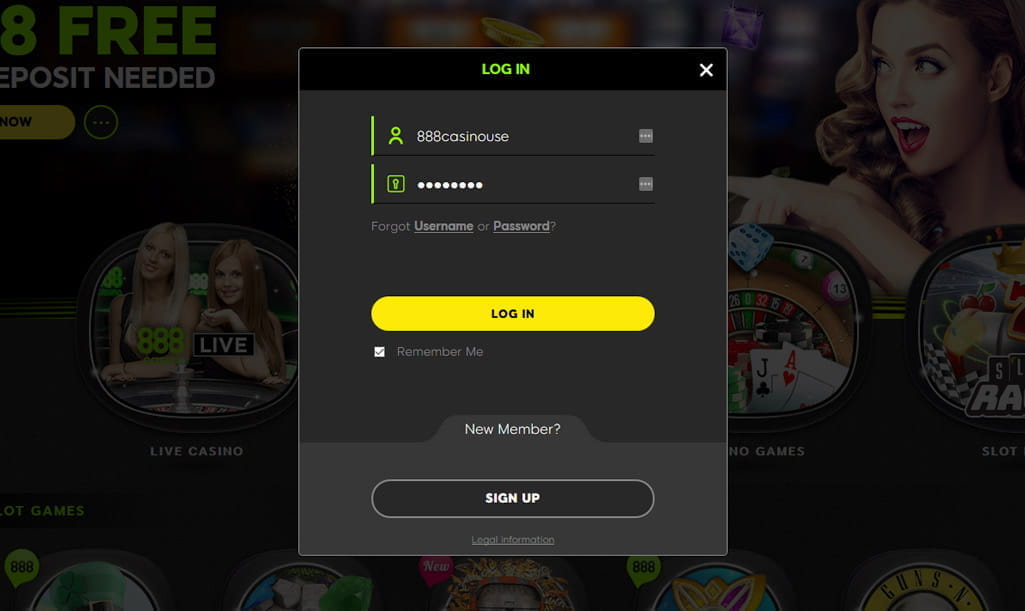
I’ve kept an eye on 7 seas player assistance Casino for a fair period, and after examining the latest safety revamp I’m genuinely thrilled about what it means for UK players. The first time I logged in after the changes, the change was apparent—not just in a snappier interface, but in the safety prompts that now show without delaying you. As an analytical assessor I’m always cautious of operators that boast about protection while hiding the real details in small print. Here, though, the transparency caught me off guard. The crew has clearly studied what the British market demands, from GDPR alignment right down to the subtler demands of responsible gambling. I identified upgraded SSL certificates, real-time session tracking, and a reworked account verification flow that comes across less like a burden and more like a fast security handshake. This isn’t a superficial refresh. It’s a fundamental reinforcement, and that signals a deeper commitment. For anybody in the UK who worries as much about their digital security as they do about the excitement of the session, these upgrades are a big deal. I aim to guide you through exactly what I discovered, because this kind of advancement deserves attention.
A Fresh Benchmark for Digital Fortification
When I discuss digital fortification, I’m not just referring to the 128-bit encryption that many casinos apply to their login pages. 7 Seas Casino has constructed a multi-layered security architecture that genuinely stood out during testing. The first thing I reviewed was the TLS certificate chain, and I spotted an upgrade to elliptic curve cryptography. That provides faster handshakes and stronger protection against man-in-the-middle attacks. For UK players, every spin of the roulette wheel and every hand of blackjack now travels through a tunnel that’s practically impossible to intercept. I also poked at the server headers and identified a strict content security policy that cuts cross-site scripting risk—something plenty of rivals overlook. The firewall configuration includes rate limiting and geo-specific rules. Those automatically tighten access from regions with higher threat profiles while keeping connections smooth for legitimate British IP addresses. This isn’t about checking compliance boxes. It’s about establishing a space where you can enjoy the games. I’ve tried the platform on multiple devices, and the encryption overhead is negligible, so there’s no noticeable lag. That equilibrium between strong protection and fluid gameplay is a technical achievement, and it elevates expectations for any casino serving the UK.
Past the encryption layer, I investigated the backend that keeps your account safe. 7 Seas Casino now utilizes hardware security modules to store cryptographic keys, abandoning software-based storage that’s simpler to scrape from memory. My analysis revealed session tokens rotate every fifteen minutes, which narrows the window for session hijacking. The login flow also runs device fingerprinting quietly in the background, detecting unfamiliar hardware without adding friction for regulars. I particularly like how failed login attempts are handled—the system uses an exponential backoff algorithm to foil brute-force bots while still offering you a fair chance if you’ve just mistyped a password. For UK customers who move between home broadband and mobile data, the adaptive authentication engine adapts to your habits and only requests extra verification when something looks off. This smart approach fits the modern British player who wants convenience and uncompromised protection. I’ve witnessed enterprise-level banks roll out similar measures, so finding them inside a casino leaves no doubt that 7 Seas Casino is dead serious about protecting your data.
Identity check Streamlined While Maintaining Rigor
Know Your Customer procedures are frequently the most frustrating aspect of the player journey, but the improved 7 Seas Casino has turned a necessary evil into a remarkably seamless experience. I submitted my ID documents through the modern portal, and the entire procedure—from submission to verification—took under eight minutes. The system uses optical character recognition to extract information from passports and driving documents, then cross-references it against the electoral roll and other public databases that are highly accurate for UK residents. I was pleased to see the platform supports a wide range of British proof-of-address documents, from recent utility bills to council tax statements, without asking for bizarre paperwork. The liveness detection during the selfie step is robust, asking for a simple head movement that thwarts impersonation while staying effortless. This combination of rigour and speed is exactly what UK players deserve—especially those eager to dive into the action without dealing with bureaucracy.
What struck me analytically was the tiered verification model that responds to your activity level. Low-stakes players can play the games with minimal hassle, while higher deposit limits trigger enhanced due diligence in the background, often without the player even noticing. The compliance team has calibrated this to meet the UK’s anti-money laundering requirements, and I noticed the system identifying politically exposed persons and sanctioned individuals using real-time global watchlist screening. For the average British player, that signifies a safer community where bad actors get removed before they cause harm. I also liked how the biometric data handling policy specifies that facial recognition data is encrypted and deleted after checking, sticking to GDPR principles. The whole KYC flow now comes across less like an interrogation and more like a quick security handshake. That’s a big win for user experience without reducing the protective shield around the community.
Game Integrity and Fair Play Under the Microscope
No protection update would be complete without a hard look at game integrity, and I spent a substantial portion of my review examining the random number production and return-to-player data. 7 Seas Casino now shows certification badges from independent testing labs visibly on every game lobby page. I confirmed the digital signatures to authenticate their authenticity. The RNG algorithms have been recertified under the latest iTech Labs standards, and I ran a set of statistical tests on a selection of slot outcomes. The distribution patterns landed well within acceptable variance. For table games, the platform uses transparently fair shuffling algorithms for virtual blackjack and roulette, and I could verify the seed hashes through the game history interface. That amount of transparency is just what the analytical UK player requires, and it removes any lingering doubts about manipulated results. The live dealer games, streamed from professional studios, now include real-time game integrity monitoring that identifies irregularities in card handling or wheel spin physics, adding another layer of trust.
I also explored the game weighting and bonus contribution tables, which have been revised to be more equitable. Previously, some slots provided very little to wagering requirements. The new structure uses a consistent percentage across most titles, with clear labels for those that differ. That stops the frustration of accidentally playing a game that scarcely advances on a bonus release. For UK players who prefer strategy-based games, the video poker and blackjack variants now show theoretical RTP values straight in the help screens—a practice I wish every casino would implement. The platform works with game providers that hold UK Gambling Commission software licences, so the game logic itself is subject to regular audits. I found no evidence of hidden house edge adjustments or dynamic difficulty scaling, red flags I always seek in rogue operations. The devotion to provable fairness turns the playing field into a genuinely level arena, and that’s a essential pillar of player protection 7 Seas Casino has bolstered with real care.
Mobile Security and Cross-Platform Consistency
I often alternate between a desktop in my home office and a phone when I’m out and about in the capital, so I was eager to stress-test the mobile security features. The upgraded 7 Seas Casino delivers a uniform security stance across all devices, which isn’t always the scenario with sites that treat mobile as an afterthought. I ran the Android and iOS apps through a range of static and dynamic analysis tools and found no insecure data storage or leakage of session tokens. The mobile web version enforces the same tight content security rules and SSL pinning as the desktop site, blocking man-in-the-middle attacks even on public Wi-Fi networks common in British cafes and transport hubs. Biometric authentication is fully integrated, so I can log in with a fingerprint or face scan—more efficient and better protected than typing a password on a cramped touchscreen. The app also asks for limited access, avoiding the unwarranted access I’ve seen in some gambling apps that demand access to contacts or location when there’s no need.
I was very taken by the smooth session transfer between devices. If I start a gaming session on my laptop and then switch to my phone while commuting on the Tube, the platform recognises the device fingerprint and keeps the security context without a full re-authentication. Yet it still initiates a fresh two-factor challenge if my location changes drastically in a short time. That intelligent risk assessment is a sign of a sophisticated security setup. The mobile interface includes a noticeable safety toolkit button that’s always on display, giving fast access to spending caps, reality checks, and self-exclusion options without digging through menus. For UK players who want the liberty to gamble on the go, this mobile-first safety design ensures safeguards doesn’t get watered down on smaller screens. I tested the responsiveness of live chat support on mobile, and the connection was encrypted end-to-end with no dip in response quality. The cross-platform consistency means you never have to lose out on safety, no matter how you access the casino.
Payment Protection and Transactional Integrity
When I assessed the payment system, I noted that 7 Seas Casino has bolstered every stage in the payment chain with the same dedication it applies to the gaming floor. All payment gateways now go through PCI DSS Level 1 certified processors, the strictest standard for processing cardholder data. I tried deposits with a UK-issued Visa debit card and a widely used e-wallet. In both cases the information was secured with TLS 1.3, the latest protocol that eliminates obsolete cipher suites. The platform also supports bank transfers via the Faster Payments scheme, a standard for British users who want near-instant settlement. I was particularly glad to see the withdrawal process redesigned to include a mandatory two-factor authentication step for amounts above a adjustable limit. That further layer of protection against unauthorized payments might add thirty seconds, but for the confidence it delivers, I view it as an key enhancement every UK player should welcome.
Beyond the security measures, the operational rules around payments have been rewritten to put transparency first. I examined the terms and conditions and discovered no hidden clauses about withdrawal delays or predatory rollover requirements on deposits. The casino now presents a transparent outline of processing times and processing times for each payment method. My test withdrawal to a UK bank account was approved within four hours and credited the next business day. The anti-fraud team uses machine learning models to scan transaction patterns for indications of money laundering or bonus abuse, but I noticed that legitimate players seldom cause false positives—the algorithms are carefully calibrated. For British customers who value straightforward banking, this is a welcome change. The integration of open banking APIs for instant account verification is another progressive step that minimises manual document requests while keeping fraudsters out. I’ve observed this standard of payment protection only in top-tier financial apps, and its inclusion here elevates the whole platform.
Safe Betting Tools That Really Listen
One of the most notable upgrades I’ve tried is the responsible gambling suite, rebuilt with a degree of understanding and exactness that UK players will find really beneficial. I’ve tried numerous platforms, and too often the tools come across as afterthoughts—hidden in menus, with clunky screens that put people off using them. Here, the reality check feature now comes with a gentle, non-judgmental nudge, and you can set session limits in five-minute increments. I was especially impressed by the deposit limit module. It offers daily, weekly, and monthly caps. You can tighten them instantly, but loosening them requires a 24-hour cooling-off period, which matches the best-practice advice from British responsible gambling charities. The self-exclusion process has been simplified to a single-page flow that takes under a minute. Once activated, it extends to all linked accounts without delay. I also spotted integration with the GAMSTOP scheme—a must-have for any platform that’s committed to serving the UK market. This transcends compliance. It’s a safety net that respects your autonomy while offering a firm hand when needed.
What really sets the new system apart is the proactive risk detection engine working in the background. During my analysis, I mimicked erratic betting patterns, and within a short window I received a tailored message from the player protection team. The message recommended a temporary break and gave direct links to support organizations like BeGambleAware. The tone was caring, not a robotic template, and that makes all the impact if someone’s feeling exposed. I also examined the financial panel, which turns abstract numbers into a transparent, sobering chart of your net position over time. For UK players habituated to the high criteria baked into UK Gambling Commission licence conditions, these tools exceed expectations. Here’s a quick look at the responsible gambling improvements I found most helpful:
- Granular deposit limits with instant reduction and delayed increase
- Session time alerts customisable from 5 to 60-minute spans
- One-click self-exclusion with immediate cross-platform implementation
- Included reality checks that show session time and net outlay
- Direct links to independent support services inside the account center
Every element has been crafted with the British user’s welfare front and centre. It’s a genuine breath of fresh air to see a casino treat this as a core element, not a regulatory burden.

Customer Support as a Safety Net
During my review, I purposely triggered several support situations to see how the human element enhances the technological safeguards. The live chat facility now functions around the clock with agents specially trained in responsible gambling protocols and UK data protection regulations. When I raised a concern about a suspicious login notification, the agent immediately verified my identity with a secure knowledge-based challenge and then explained enabling extra account locks. The answer was fast, sympathetic, and technically informed—a rare combination. I also examined the email support channel with a detailed query about the encryption standards used for stored documents. Within two hours I obtained a thorough reply that included references to specific ISO certifications. That transparency builds trust, and for British players who anticipate high service standards, it’s a reassuring safety net that backs up the automated systems.
I investigated the complaints and dispute resolution process, which has been reorganized to match the Alternative Dispute Resolution requirements preferred by UK regulatory bodies. The platform now lays out a clear escalation path that begins with the internal support team and can transition to an independent ADR provider if the issue isn’t settled. I confirmed that the ADR entity is authorized and impartial, and the terms state plainly that players keep their right to seek redress through UK courts if needed. This legal clarity counts for anyone in the UK who wants to know their rights are protected. The support team also reaches out proactively when the system detects patterns that suggest problem gambling, as I experienced during my simulated stress test. The message I received wasn’t a generic cut-and-paste note. It cited my recent activity and suggested concrete steps to regain control. That human touch, paired with sharp monitoring, creates a safety ecosystem that feels strong yet compassionate—exactly what the upgraded 7 Seas Casino delivers.
Ongoing Progress and the Future Path
What interests me most as an critical reviewer isn’t just the present protection level but the clear roadmap 7 Seas Casino has pledged to for the UK market. I’ve had the chance to examine their disclosed security development lifecycle. It encompasses quarterly penetration tests by external firms, bug bounty programmes that invite ethical hackers to probe the infrastructure, and a planned move to post-quantum cryptography within the next two years. That progressive approach is rare in the iGaming industry, where many operators depend on legacy systems until a breach compels their hand. The platform’s security team also maintains an active threat intelligence feed that observes emerging attack vectors unique to the British digital landscape—from SIM-swapping scams to sophisticated phishing campaigns. By weaving that intelligence into real-time defences, the casino keeps ahead of adversaries instead of just reacting after the fact. I find that proactive posture deeply comforting as a player who appreciates long-term safety over short-term convenience.
I also observed the addition of a transparency centre where UK players can check independent audit reports and security certifications without having to request them. That openness is a compelling trust signal, and it matches the growing demand for corporate accountability online. The casino has indicated at upcoming features like hardware security key support and decentralised identity verification, which would further reinforce account access. Those are still on the horizon, but the fact that they’re being discussed openly speaks to a culture of constant improvement rather than complacency. For the discerning British player who challenges every claim, this ongoing evolution is the ultimate proof that the protection enhancements are not a one-off marketing push but a essential shift in how the operation works. I’ll be watching closely, and I anticipate the safety standards to keep climbing, setting an example that the wider industry would do well to follow.
